The Seaside STR "Red Line" Isn't the Real Risk. The Permit Is.
September 17, 2026
September 17, 2026
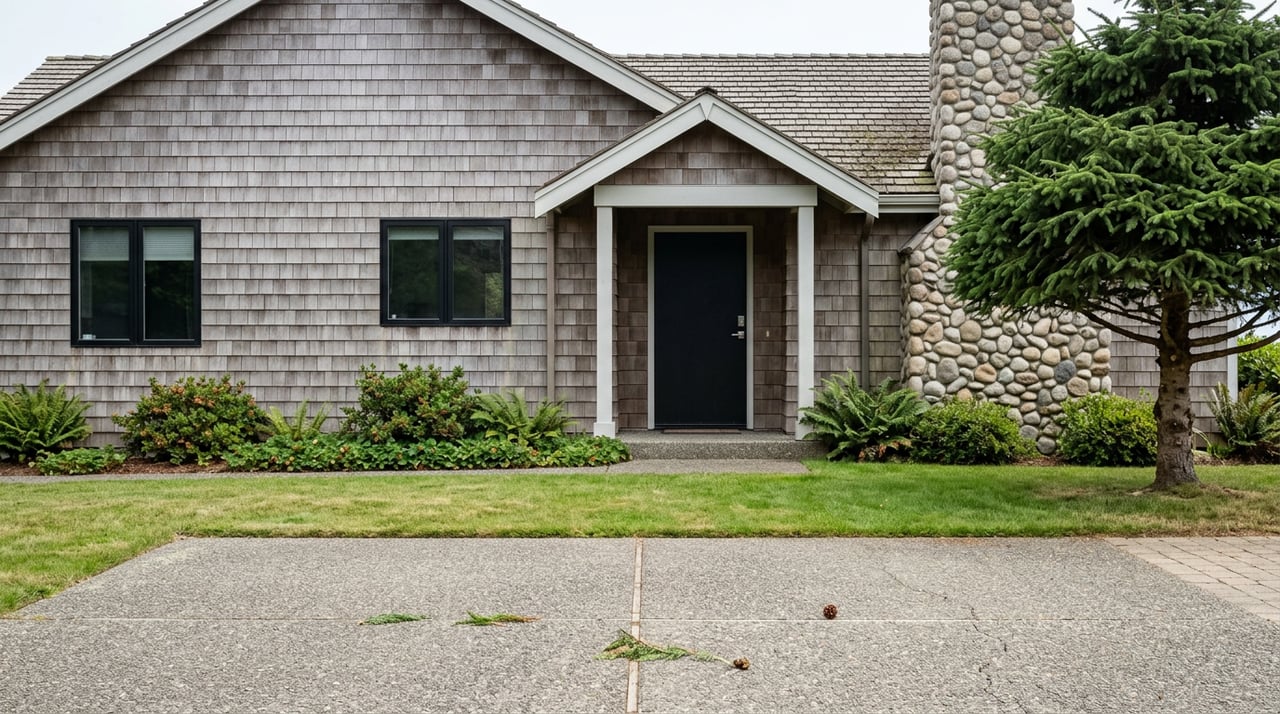
Drive along Beach Drive in Seaside and you can stand in front of two cottages that look nearly identical: same era, same cedar siding, same distance to the sand. One sits inside the zone where the city allows vacation rentals. The other, a few streets east, does not. Locals call the dividing line the Red Line, because it roughly follows Highway 101 through town. Buyers shopping for an investment property here usually learn about that line early, often from the listing agent or from a quick look at the city's short-term rental page.
What most buyers don't learn until much later, sometimes after closing, is that the Red Line only answers half the question. Standing on the correct side of it tells you a property is eligible to apply for a vacation rental license. It does not tell you that you, the new owner, will get one. That gap between eligible and approved is where a lot of coastal investment plans quietly come apart.
Seaside's approach to short-term rentals is built into Chapter 120 of the city code, adopted as Ordinance 2024-04. Rather than setting a single citywide cap, the city drew boundaries: vacation rentals are permitted in specific zones west of Highway 101, generally the beachfront and downtown blocks, while inland residential neighborhoods east of the highway do not allow new licenses at all. The ordinance gets granular about it. One boundary runs from Edgewood Street west to the ocean shore. Another follows properties that abut Avenue U east to the Necanicum River. A third traces the east side of Ocean Vista Drive across from the Cove parking lot north to a spot locals know as Sailor's Grave.
That level of street-by-street specificity matters because it means the Red Line isn't really one line. It's a series of them, and a parcel can sit a single lot away from eligibility. A buyer who assumes "west side of town" is close enough to know the answer is guessing. The only reliable read on a specific address comes from the city's Community Development staff, not from a map glanced at during a showing.
Even inside an eligible zone, the ordinance layers on saturation limits, meaning the city can decline new applications in an area that already has enough vacation rentals nearby, and it excludes some condominium properties outright. Seaside has never published a single saturation percentage the way some neighboring towns have. That absence isn't an oversight. It's the point: the answer only exists at the address level, decided case by case.
Here is the part of the ordinance that changes how a buyer should read a listing. Under Chapter 120, a short-term rental license is issued to a specific owner for a specific dwelling. It does not transfer when the property sells. A new owner does not inherit the license along with the deed. They inherit a location that may or may not qualify, and then they start the application process from zero, subject to whatever saturation limits and parking standards apply at that moment.
The city's own history with this rule shows how narrow the exceptions can be. In February 2025, the City Council passed Ordinance 2025-01, which opened a 90-day window, running from March 25 to June 23, 2025, for owners of properties that would have qualified as vacation rental dwellings before July 11, 2024, to apply under the older standard. That window has closed. It existed for a specific, dated group of prior owners, not for future buyers, and there is no indication a similar grace period will reopen on any particular schedule.
So when a listing shows twelve months of strong Airbnb income, that income describes what the seller's license allowed the seller to do, at whatever bedroom count and parking configuration the seller had approved. It says nothing about what a buyer will be approved for. The trailing revenue in the listing packet is a historical fact about the current owner's paperwork, not a feature that transfers with the sale.
Seaside's zoning-line approach is only one way to manage the tension between vacation rental demand and year-round housing. Three nearby cities have chosen different mechanisms entirely, and comparing them helps explain why "STR-friendly coastal town" is not a single category.
| Town | Core mechanism | What it means for a buyer |
|---|---|---|
| Seaside | Zoning line (Red Line, roughly along US-101) plus saturation limits | Eligibility depends on the exact parcel; license does not transfer at sale |
| Cannon Beach | Long-running permit program; unlimited licenses fully allocated | New applicants are generally limited to a 14-day-per-year permit; a formal cap ordinance was under Planning Commission review in early 2026 |
| Gearhart | 2021 ordinance banning new residential licenses | Existing licenses are grandfathered but not reissued once given up |
| Manzanita | Hard cap at roughly 17.5% of housing stock, near 250 licenses | Some residential zones have reached the cap and gone to a waitlist |
None of these towns are wrong to have chosen their own path, and none of it reflects on the character of the communities themselves. But the differences matter enormously to someone comparing a Seaside address against a Manzanita or Cannon Beach one purely as an income property. A Cannon Beach buyer today is largely looking at a 14-day seasonal permit unless they can find a rare license transfer. A Manzanita buyer may be looking at a waitlist with no published timeline. A Seaside buyer is looking at a system where the geography is precise but the outcome is still decided one application at a time.
Assuming a Seaside address sits inside an eligible zone, two formulas determine whether the city will actually sign off on the license.
A four-bedroom house, for example, needs to clear a parking test of four spaces and an occupancy ceiling of twelve guests, and the city can further restrict occupancy during review if the property doesn't support it. A charming older cottage with a single gravel pull-off is not automatically disqualified, but it is exactly the kind of detail that can turn an assumed approval into a denied one. Add to that the requirement for a local contact who lives in Clatsop County and can respond to complaints within two hours, plus an annual re-inspection by the city's Code Compliance Officer, and the operational side of owning a Seaside vacation rental starts to look less like a passive investment and more like a small business with a compliance calendar.
None of this is meant to suggest Seaside's rules are unusually harsh. They're specific, which is different, and specificity cuts both ways. A buyer who does the homework can find real clarity here that some other coastal towns don't offer. A buyer who skips it can end up owning a beautiful house a block outside the eligible zone, or inside it but two parking spaces short, with a projected income built entirely on the previous owner's approved license.
The city's own regulatory history offers a reminder of how quickly the rules underneath an existing license can shift. In a report on a Seaside City Council ordinance that raised annual vacation rental fees from a range of $75 to $150 up to a flat $400 regardless of a property's size, Oregon Public Broadcasting found at least one owner who said she found out only when she went to renew. The dollar figures from that specific ordinance are years old and not the point. The pattern is: license holders in Seaside have been surprised by council action before, and a buyer relying on "the current owner has always operated this as a rental" is relying on a status that the city, not the owner, controls.
If a Seaside listing is being marketed with rental income as part of its value, a few steps are worth doing before that number shapes an offer.
Does a Seaside short-term rental license transfer to a new owner when the property sells? No. Under Chapter 120 of the city code, the license is issued to a specific owner for a specific dwelling and does not carry over at sale. A new owner applies as if the property had never been licensed.
Is there a published saturation percentage for Seaside, like Manzanita's cap? Not that the city has made public in the same way. Seaside's saturation limits are applied at the time of application, which means the only current answer for a given address comes from Community Development staff, not from a citywide number.
How is Seaside's approach different from Cannon Beach's or Gearhart's? Cannon Beach's unlimited license pool is fully allocated, so new applicants generally start with a 14-day-per-year permit. Gearhart stopped issuing new residential licenses in 2021 and lets existing ones expire without replacement. Seaside instead uses a fixed geographic zone combined with case-by-case saturation review, so the geography is precise even though the outcome for any single address still requires direct confirmation.
If you're weighing a Seaside property against options in Cannon Beach, Manzanita, or Gearhart and want a straight read on what a specific address can and can't do, that's exactly the kind of ground-level question Andrea Mace and the Mace Team work through with buyers every week. Schedule your concierge consultation and bring the address. That's where the real answer starts.


The Oregon Coast Town that Time Forgot
Cannon Beach Lifestyle
Cannon Beach Cottage Tour & Stormy Weather Arts Fest
Now, there's a new trail to discover called the Neahkahnie Gap.

More than 30 years later, I’m still here—and the Oregon Coast continues to shape the way I live, work and think about home.

How to navigate the crowds and have a good time in everyone's favorite beach town.
Want to sell now or in the future? Let's start a conversation about how my services can be put to use to market and sell your home to a qualified buyer.