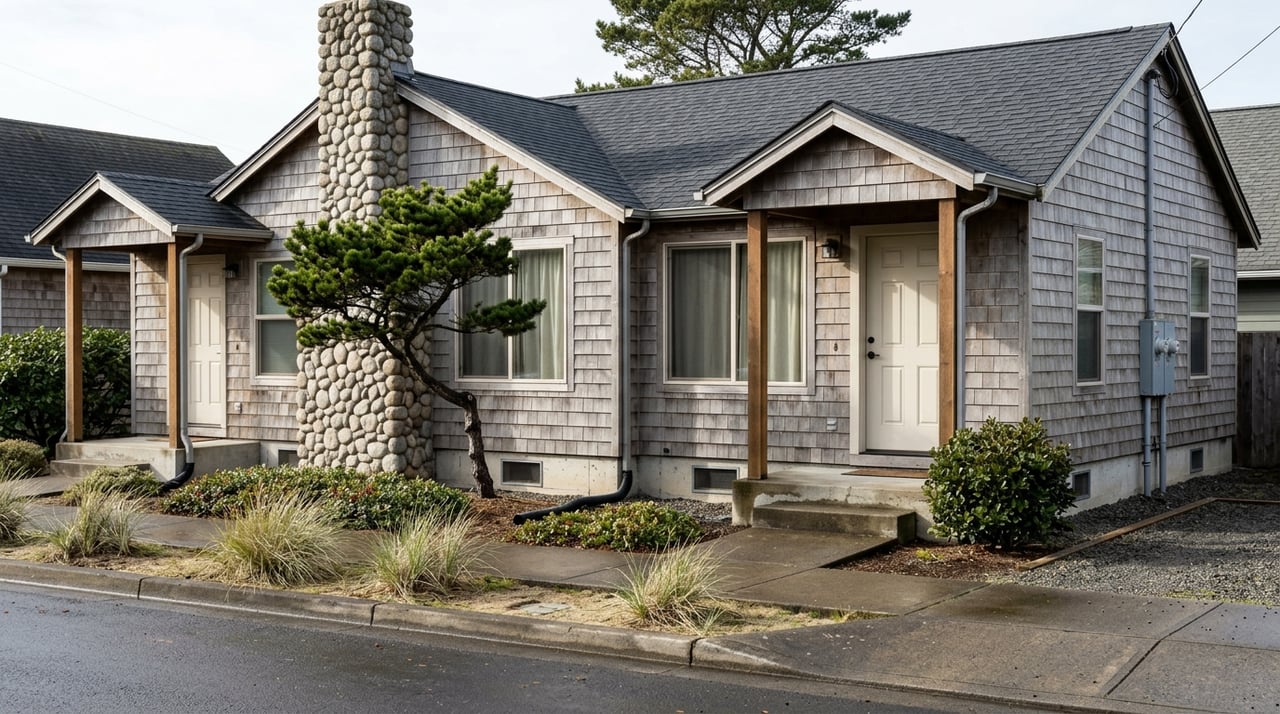
Duplex And Small Multi‑Family Investing In Nehalem And Wheeler
April 23, 2026
April 23, 2026
Wondering whether a duplex or small multi-family property in Nehalem or Wheeler could be a smart coastal investment? These two Nehalem Bay communities offer limited inventory, distinct seasonality, and a setting that draws both full-time residents and part-time coastal users. If you are weighing cash flow, long-term value, or a live-in-one-unit strategy, this guide will help you understand what makes these markets different and what to review before you buy. Let’s dive in.
Nehalem and Wheeler are not large rental markets with deep inventory and easy comp sets. They are small coastal communities on Nehalem Bay, with Nehalem located on the west bank of the Nehalem River and along the bay, and Wheeler describing itself as a small village at the edge of the Pacific on Nehalem Bay, according to the City of Nehalem and City of Wheeler.
That small scale matters for investors. The 2020 Census profiles show Nehalem had 270 residents and 179 housing units, while Wheeler had 422 residents and 275 housing units. The same profiles reported that 33.5% of Nehalem housing units and 28.7% of Wheeler housing units were vacant or seasonally occupied in 2020, based on Portland State University Census profiles.
For you as a buyer, that means demand can be real, but the year-round tenant pool may be thinner than in a larger town. It also means one listing or one sale can skew your view of the market if you do not step back and look at the broader context.
If you are picturing a typical apartment building, that is usually not what this market offers. In Nehalem and Wheeler, the small multi-family inventory is more likely to be duplexes, duplex conversions, cottage-style groupings, or compact properties with three to five units.
Nehalem’s zoning ordinance allows duplexes in R2 and allows duplexes plus multifamily dwellings in R3. The same ordinance also lists short-term rentals as permitted uses in those residential districts, which is important if your strategy includes furnished or seasonal use. You can review that directly in the Nehalem zoning ordinance materials.
Wheeler is also evolving. Its 2025 middle-housing code update materials show the city moving to allow duplexes and other middle-housing types in residential areas, with standards tied to infrastructure and parking. For investors, this suggests opportunity, but also a need to confirm what is allowed on a specific parcel before you make assumptions.
Recent and current marketing examples reflect the scale of the local product. Research in this market includes a Nehalem duplex on Evergreen Place, an ocean-view duplex on 2nd Street, a Wheeler property marketed as a five-unit cottage and duplex combination, and another small multi-family property on Fir Road. The takeaway is simple: expect niche inventory, not volume.
One of the biggest challenges in Nehalem and Wheeler is that there just are not many rentals or small multi-family properties available at once. Zillow currently shows 19 rental listings in Nehalem and 7 in Wheeler, while Wheeler results also pull in nearby areas rather than giving you a deep, town-specific rental pool. Zumper reports only 12 rentals in Nehalem and notes that its data is limited because inventory is so tight, according to Zillow rental data for Nehalem and Zumper’s Nehalem rent report.
This matters because underwriting in a thin market requires more judgment. You may not have a long list of recent comparable rentals, and you may need to rely on a mix of current inventory, property condition, location, and use type to estimate realistic income.
Rent data in a market this small can be useful, but it should never be treated as absolute. Zumper’s April 2026 Nehalem report gives a snapshot based on the last 30 days of inventory and says the sample may not represent the full market because the local data set is small.
According to that report, Nehalem’s median rent across all property types was $3,000. The same report lists average apartment rent at $1,622, 1-bedroom rent at $1,100, 2-bedroom rent at $2,500, 3-bedroom rent at $2,900, and house rent at $3,100. In a larger market, those figures might offer stronger guidance. Here, they are best used as reference points, not guarantees.
There is also a regulated affordable housing segment in town. Northwest Oregon Housing Authority lists Echanie Court Apartments in Nehalem as a 12-unit family housing complex with 2- and 3-bedroom units subsidized through USDA Rural Development. That tells you there is some established rental housing in the area, but not a deep open-market supply.
Seasonality is one of the most important variables in Nehalem and Wheeler. The high share of vacant or seasonally occupied units suggests a meaningful second-home or part-time-use footprint. Tourism also plays a role in the wider Tillamook Coast economy. The Tillamook Coast Visitors Association annual report highlights its focus on year-round economic vitality through sustainable tourism and destination development.
That does not prove that a seasonal rental strategy will outperform a long-term lease. It does mean you should model both peak-season and off-season performance before you count on income. In markets like this, a property can look excellent during the busy months and feel far less predictable in winter.
A conservative underwriting approach should include:
In a small coastal market, zoning can make or break an investment plan. Just because a property appears to function like a duplex or a multi-unit rental does not mean your intended use is automatically allowed.
Before you buy, verify:
Nehalem’s zoning materials are especially relevant if you are targeting a duplex or a small 2- to 4-unit property. Wheeler’s current code-update direction is also worth reviewing if you are considering future flexibility or redevelopment potential.
Flood risk is not a side note in these communities. It is part of the core investment analysis.
Nehalem participates in the National Flood Insurance Program Community Rating System and has a CRS rating of 7, which the city states equates to a 15% premium discount on flood insurance policies within city limits. The city also notes that some intersections may flood during high tides and provides flood-zone maps and elevation-certificate resources on its flood-zone information page.
Wheeler has its own floodplain considerations. The city states that a Floodplain Development Permit is required for work in the Special Flood Hazard Area identified on FEMA maps. Wheeler also notes that part of the city is in a tsunami inundation zone and provides evacuation assembly area information through its floodplain development permit page.
For you, this means flood insurance, elevation, site access, and future improvement costs are not optional research items. They are central to your cash flow, renovation budget, and resale position.
Small-town infrastructure can affect both current operations and future plans. Nehalem’s public works department handles water, streets, rights-of-way, and storm drains, while sewer service is handled by the Nehalem Bay Wastewater Agency. The agency’s system map page notes that its GIS map shows sewer infrastructure and that wastewater system modifications must go through DEQ review.
Nehalem has also updated utility pricing. Its water-rates page says new water rates were adopted in June 2024 and became effective with the July 2024 billing cycle after no increase since 2010. That is a good reminder to verify current utility costs, connection charges, and capacity before you close.
Wheeler’s infrastructure is also limited by scale. The city reports maintaining about 10 miles of streets and a water system that includes a well site, treatment system, two 350,000-gallon reservoirs, and roughly 242 to 265 water services serving about 450 people. If you are considering added units, a conversion, or meaningful upgrades, ask detailed questions early.
If you are evaluating a duplex or small multi-family property in Nehalem or Wheeler, your underwriting should be realistic and flexible. Scenic demand and coastal scarcity can support value over time, but these are not plug-and-play rental markets.
A smart approach usually includes three lenses:
Can the property support itself under a conservative long-term lease model? If your numbers only work with perfect peak-season occupancy, the deal may be fragile.
Are flood exposure, access, parking, or utility limits likely to affect income, insurance, or renovation plans? A lower purchase price can lose its appeal quickly if major site constraints show up after closing.
Will the property be appealing to the next buyer? In a niche market, resale liquidity often depends on whether the property fits local use patterns, physical constraints, and the buyer pool’s expectations.
Before you move forward on a duplex or small multi-family property in Nehalem or Wheeler, review these items carefully:
In a market this small, careful due diligence is often what separates a solid coastal investment from a frustrating one.
If you are exploring a duplex, cottage-style income property, or a small 2- to 4-unit opportunity on the North Oregon Coast, working with someone who understands the local nuances can save you time and reduce surprises. Andrea Mace offers concierge-level guidance for coastal buyers who want clear insight into zoning, flood considerations, inventory patterns, and the realities of investing in small, high-character markets like Nehalem and Wheeler.


The Oregon Coast Town that Time Forgot
Cannon Beach Lifestyle
Cannon Beach Cottage Tour & Stormy Weather Arts Fest
Want to sell now or in the future? Let's start a conversation about how my services can be put to use to market and sell your home to a qualified buyer.